

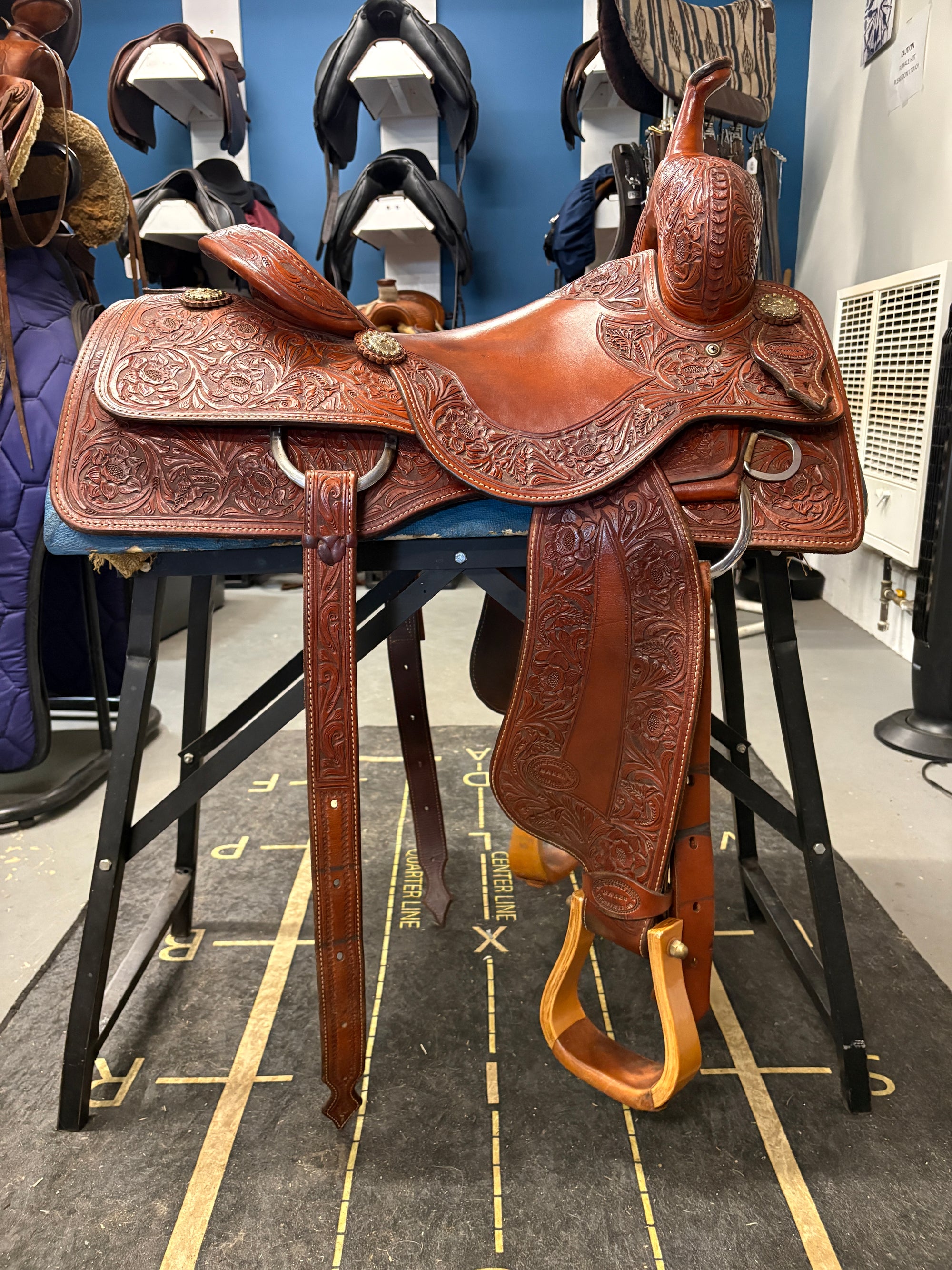
10 Saddle Scam Red Flags That Even Experienced Horse People Miss
Buying a saddle secondhand used to mean calling around, asking your trainer, maybe driving an hour to try something out. Now it means scrolling through Facebook Marketplace at midnight hoping the listing is real. Spoiler - not all of them are. Here’s what to watch for.
Scam listings have gotten convincing enough that even experienced horse people are getting caught. AI-generated photos, cloned websites, and polished fake listings have made it harder than ever to know who you’re actually dealing with. We’ve heard enough stories from our own community that we felt it was worth putting this together.
Before you send a single dollar to a stranger on the internet, run through this list.
1 - The price feels wrong in either direction
Too cheap for the brand and condition listed, or oddly high with no clear explanation - both should give you pause. Scammers sometimes price low to create urgency and get a quick sale before you have time to think. Others price high to appear legitimate, counting on the assumption that expensive must mean real.
Trust your gut. If the price made you do a double take, that reaction is worth paying attention to.
2 - Bad, blurry, copied, or generic photos
Real sellers have real photos - taken in their actual barn, of their actual saddle. If the photos look like they came from a manufacturer’s website, are suspiciously perfect, or feel copy-pasted from somewhere else, that’s a problem.
Do a quick reverse image search on the photos before you go any further. A genuine seller will always be happy to send more photos or a short video - a specific angle, the serial number, the underside of the flap. If they hesitate or make excuses, that tells you everything you need to know.
With AI image generation now widely available, even "original" photos can be fabricated. When in doubt, ask for a video.
3 - Check the email address or account the message is coming from
This is one of the most overlooked red flags because people tend to skim past it. Scammers use email addresses and account names that look almost right - a extra letter slipped in, a number replacing a letter, or a completely unrelated domain pretending to belong to a real business or seller.
Examples to watch for:
- support@dover-saddlery.net instead of the real dover.com domain
- A Facebook account created last week with no posts or history
- A name with numbers appended - sarah_jones4729 - suggesting an auto-generated account
4 - Urgency and pressure tactics
"I have three other people interested." "Offer expires tonight." "I’m moving next week so I need it gone by Friday." These are classic pressure tactics designed to get you to act before you have time to think clearly.
A genuine seller with a legitimate saddle isn’t going to disappear if you ask for 24 hours to do your homework. Anyone who makes you feel like you’ll lose the deal if you take a breath is using urgency as a weapon.
Watch for sellers who also push you to move the conversation off the original platform quickly - "just text me directly" or "email me instead." Legitimate sellers are comfortable staying where the listing lives.
Slow down. A good saddle will still be a good saddle tomorrow.
5 - The seller has no traceable history
A real horse person selling a saddle usually has some kind of digital footprint. They’ve been in a Facebook group for a while. They have reviews from past sales. Their account has posts going back more than two weeks. Their profile photo looks like an actual person, not a stock image.
A brand new account with no history, no reviews, no community presence, and a single listing is a significant red flag. Take five minutes to look them up before you go any further.


6 - The saddle has already shipped - or tracking is fake
’s already on its way to you!" is one of the most common pressure tactics in online scams. You haven’t agreed to anything, you haven’t paid, and somehow the saddle is already in transit. This is designed to create a sense of obligation and rush you into payment.
When tracking numbers are provided, check them carefully:
- Does the number actually work on Canada Post, UPS, or FedEx?
- Does the delivery address match where you actually live?
- Does the tracking show a package weight that makes sense for a saddle?
7 - Ask them horse questions
This is our favourite tip - and it works every time. A real horse person can answer basic questions about their horse and their tack without hesitating. A scammer running multiple fake listings cannot.
Try asking things like:
- What discipline did you ride in this saddle?
- What breed and build was the horse it was fitted to?
- Why are you selling it?
- Has it had any repairs or reflocking?
Vague, generic, or evasive answers are a red flag. A genuine seller will have no trouble with any of these - they’ll probably tell you more than you asked for.
8 - Responses feel off or automated
Pay attention to how the seller communicates. Are their answers slightly off from what you actually asked? Does the grammar feel inconsistent - perfect in the listing but strange in messages? Do responses arrive at odd hours or feel copy-pasted?
AI-generated scam responses are getting better, but they still have tells. If the conversation feels like you’re talking to a script rather than a person, trust that feeling. Ask a specific follow-up question that requires a genuine personal answer and see what comes back.
9 - They put pressure on for a quick deposit
A deposit to “hold” an item before you’ve received proper documentation, verified the seller, or seen a real video of the saddle is a classic advance fee scam. Once the deposit is sent, the seller becomes unreachable.
No legitimate seller needs a deposit before you’ve had a proper chance to evaluate what you’re buying. If someone asks for one early in the conversation, walk away.
10 - Watch for cloned or duplicate website
This is one of the newest and most sophisticated scam tactics - and it’s catching people who have been buying tack online for years. Scammers create near-perfect duplicate websites of well-known tack brands and retailers. The URL is slightly different, the prices are suspiciously good, and everything looks completely legitimate.
Before purchasing from any website, check:
- The URL carefully - look for extra letters, hyphens, or a different domain extension
- How long the site has been live - a domain registered last month is a red flag
- Whether there is a real phone number - and call it
- Google them, to confirm if others come up
When in doubt, pick up the phone and speak to a real person. A scammer won’t answer.

How We Do Things Differently at Evolution Equestrian
We’re a consignment tack shop in the Comox Valley on Vancouver Island - and we know that not every buyer is local. That’s why we’ve built our process around the things that make online buying feel safe, because we’ve heard the stories and we take them seriously.
The Bottom Line
Buying a used saddle online doesn’t have to be a gamble. Take your time, ask questions, and trust your instincts. If something feels off, it usually is - and no saddle is worth losing money to a stranger who was never real.
And if you want to skip the uncertainty altogether - come find us. We’re here, we’re real, and we’re happy to help you find the right saddle for you and your horse.


