

Decoding French Saddles
Buying a used French saddle without knowing how to read the stamp is like buying a horse without a vet check - you might get lucky, but why risk it?
Many French-made English saddles are stamped with a serial number, model number, and key fitting information. The catch is that every brand speaks a different language, and some are a lot more forthcoming about what those numbers mean than others.
This is my running list of decoding notes - picked up through research, handling a lot of saddles, and a genuine obsession with getting fit right. I'm not a certified saddle fitter, just a tack nerd who thinks you deserve to know what you're buying.
This page gets updated as I learn, so bookmark it and check back.
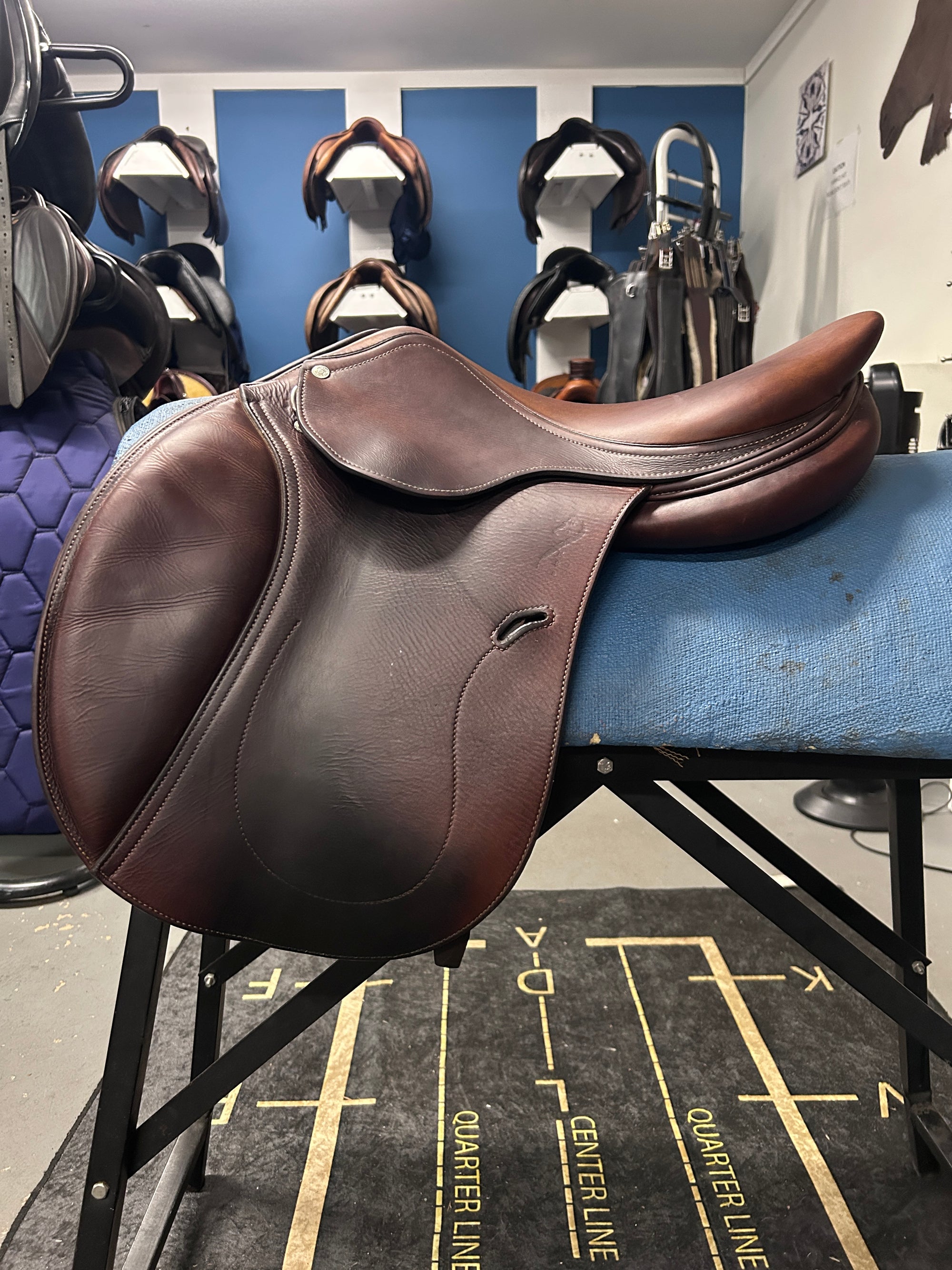
Antares
Founded in 2000 in Saintes, France by five horse industry professionals, Antares built their reputation on combining luxury with function. They offer three tree options - standard, medium wide, and two wider styles (A01 and A02) - and like most French saddles, use foam paneling to fine-tune the fit to your horse's back.
The stamp is on the billet flap or the back right of the sweat flap.
P Flat Seat
SC Half-Deep Seat
C Deep Seat
00-5 Flap Lengths
N Standard (Straight)
A-AAA Progressively more Forward Flaps
AB Lower Point with a more forward Flap
NB Lower Point with a straighter Flap
M15 T1 Pro Panels (Standard)
M10 Decreased amount across entire panel
M20 Increased amount across entire panel
RAR +/- Front of pommel near wither increased or decreased
RAG +/- Back of panel near gusset increased or decreased
DTA Larger contact area of overall panel
T Angle of the panels // As the # gets bigger the angle of the panel becomes more a framed
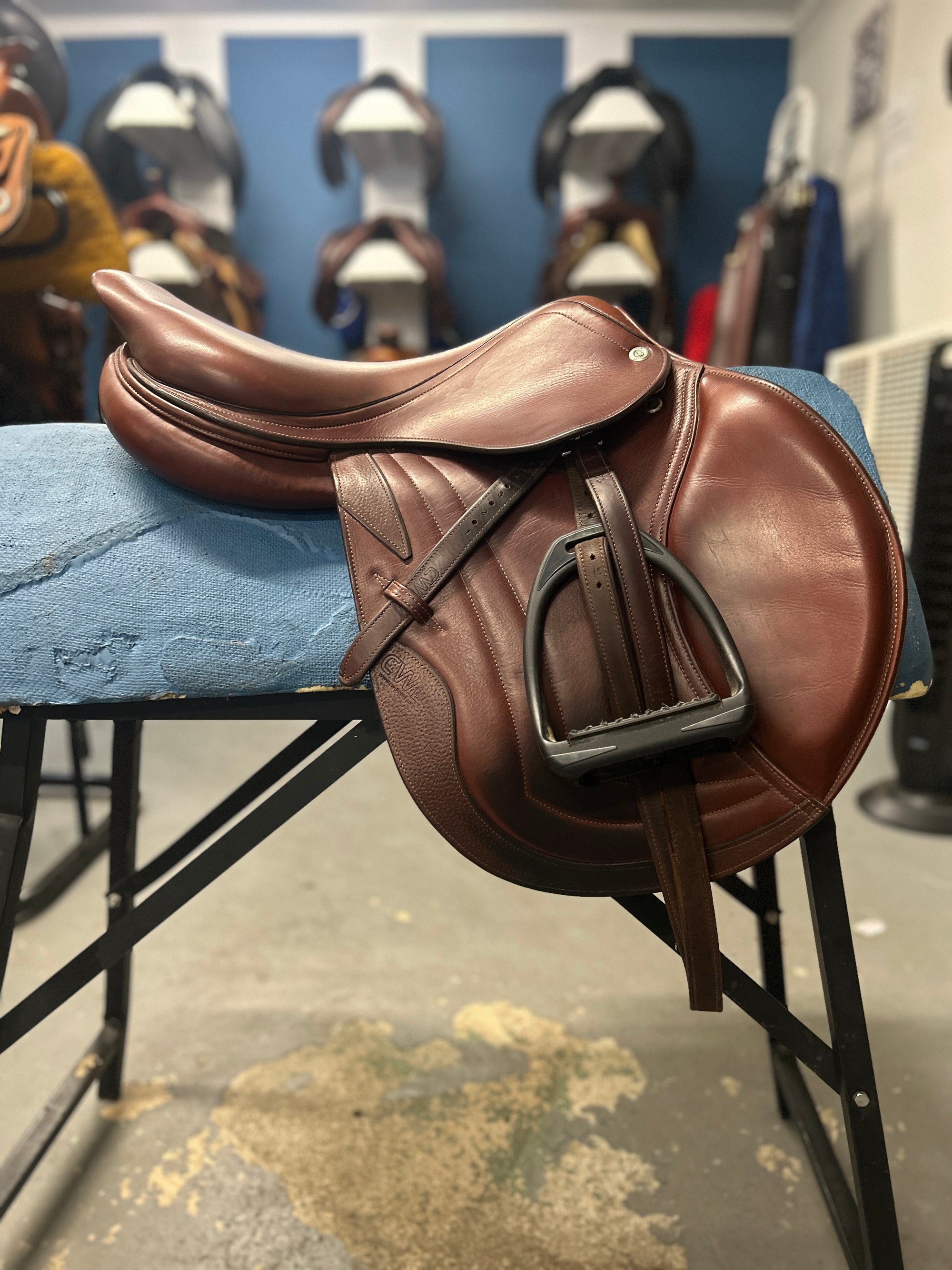
CWD
CWD is one of the most recognized French saddle brands out there, and for good reason. They're built with wide, concave integrated panels for better pressure distribution, a 3-point girthing system, and a higher-cut sweat flap to reduce bulk under your leg. Leather options include grain (most durable), calf (soft and grippy with solid durability), and buffalo (the softest and grippiest of the three).
One thing worth knowing before you shop: CWD billets run short. Most riders need to go up one, sometimes two, girth sizes from what they'd normally ride in. Don't let that catch you off guard when you're comparing listings.
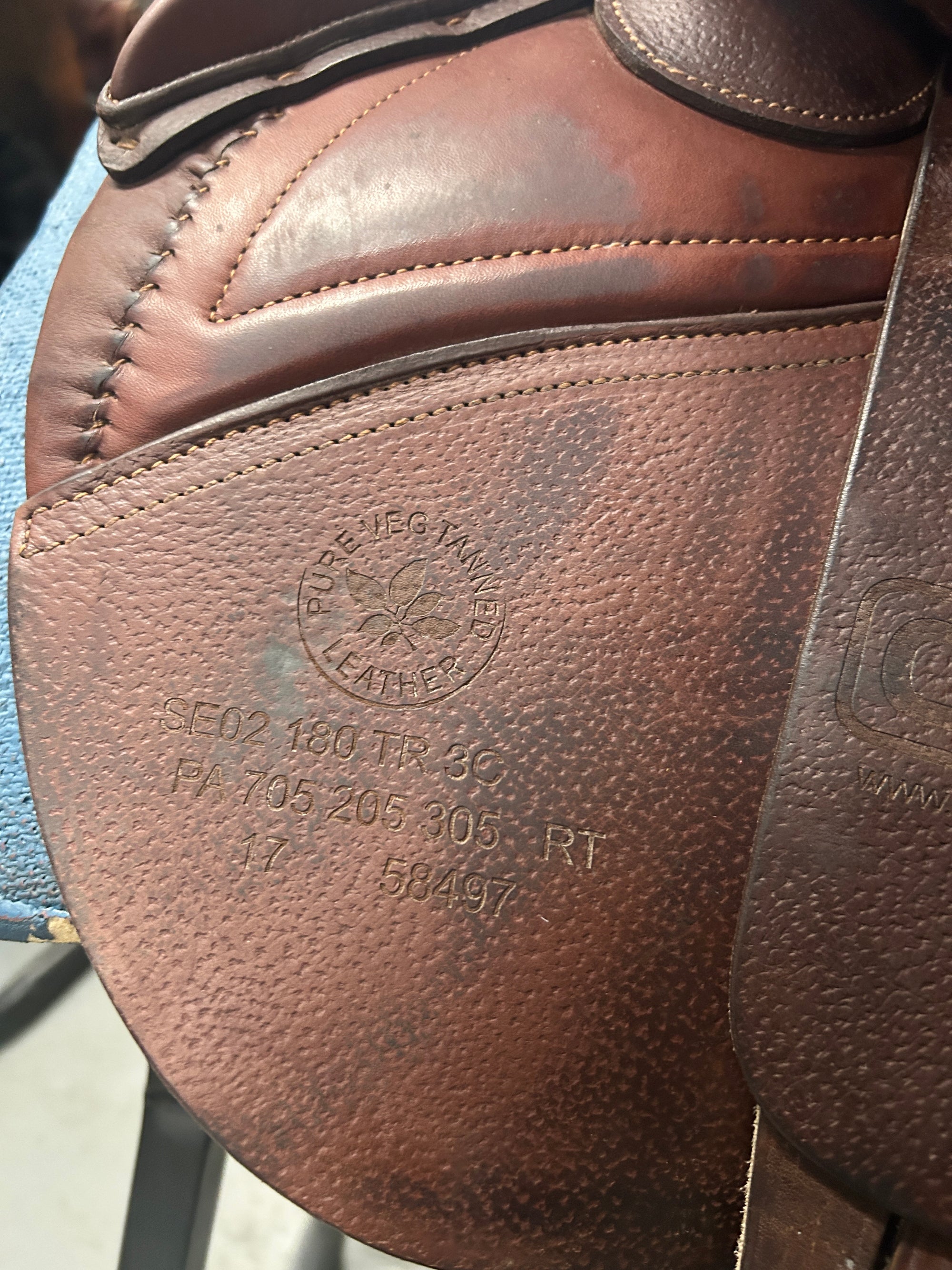
The stamp runs three lines: Line 1 - model, seat size, and flap Line 2 - foam panel configuration Line 3 - year of manufacture and serial number
Example stamp: SE01 TC 170 3L PA 715 205 205 06 560
Most French saddles are built on a similar base tree then shaped to the horse through the foam panels. Since tree size doesn't vary the way it does in other brands, understanding the panel stamp matters more than people expect.
The standard CWD panel will either have no stamp or read 700 / 200 / 300. The 700 refers to the front of the panels, 200 runs from shoulder to cantle, and 300 is the rear. The pro-panel version reads 705 / 205 / 305.
CWD flaps come in fewer shapes than most other brands - C is their forward flap and L is their straighter standard style. Sizes run 0 through 5, with 0 being the shortest.
CWD Codes
Models:
SE01 - Flat Seat
SE02 - Semi Deep Seat
SE03 - Close Contact
SE10 - Classic Kid
SE25 2Gs - Semi Deep Seat
SE26 2Gs - Flat Seat
SE32 2Gs - Mademoiselle
SE33 2Gs - Kid
SE38 2Gs - Hunter Mademoiselle
Seat depth codes: TC - Flat Seat TR - Half Deep Seat XTR - Deep Seat
Other codes: PA - Less Fill RT - Cut Back at the Shoulders RG - More Wither Clearance
Seat sizes: S0 - 16.5" S1 - 17" S2 - 17.5" S3 - 18"
Flap lengths (1 shortest, 5 longest): C - Forward L - Straight K - Kid H - Hunter
Pro Panel - 705 / 205 / 305
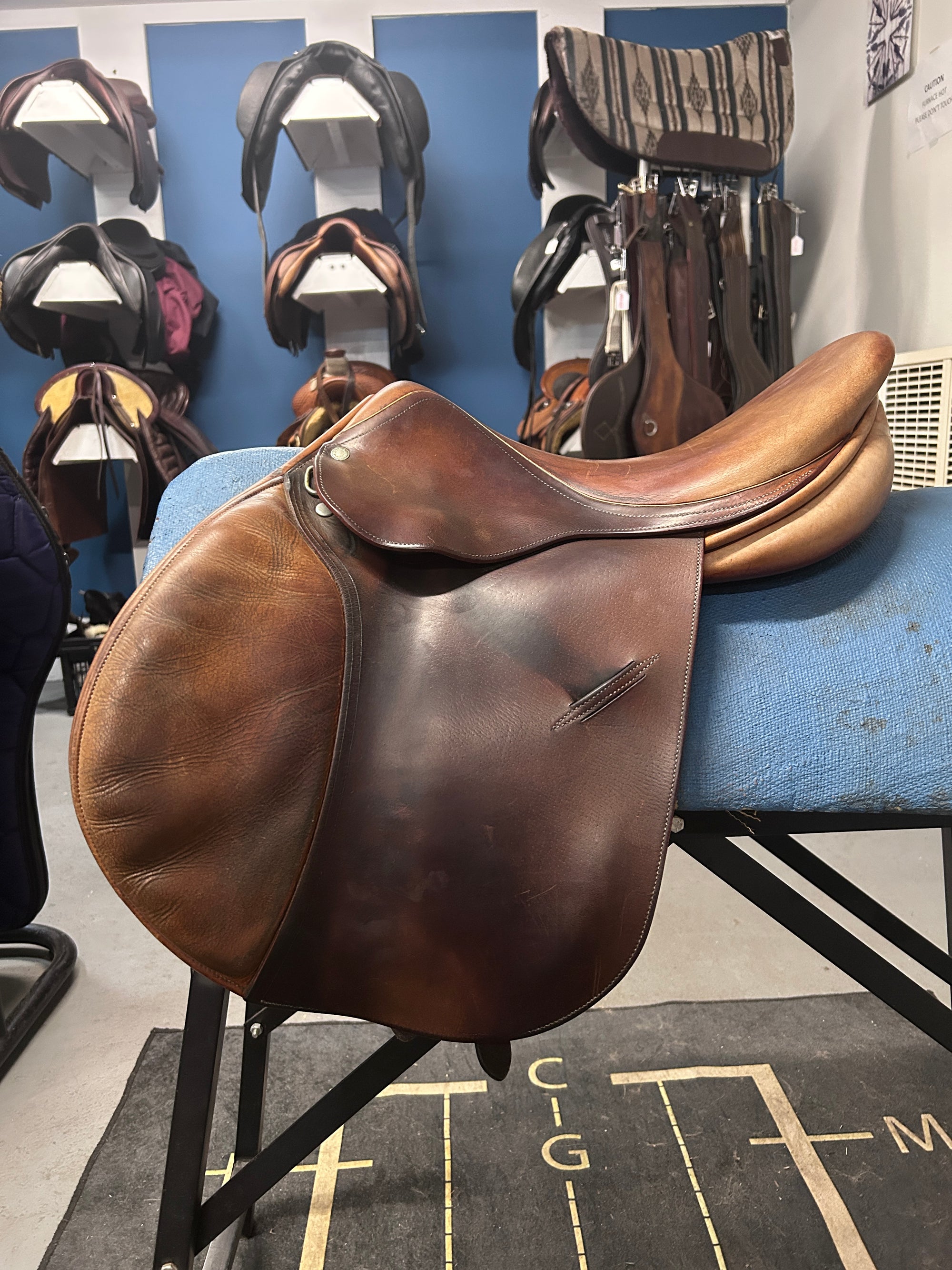
Childeric
Childeric (you'll see it written Luc Childeric) is one of the older, quieter names among the French makers. Less flash than some, but riders who find one that fits tend to hang onto it. The seats generally run true to size, which you can't say about every brand on this page, and the twist sits on the wider side, closer to an Antares or CWD than a Butet. The best-known model is simply the "M," a close contact saddle, though they also build a monoflap dressage saddle called the DAC.
The thing to know is that Childeric's stamp format shifted over the years, so two of them can read a little differently. You'll generally find a flap code, a tree letter, a seat size, and a year.
The stamp is under the sweat flap.
Example stamp: 2 1/2 M 175 / Z 23 2000
- 2 1/2 = flap (regular length, forward)
- M = tree width (medium)
- 175 = seat size (17.5")
- Z 23 = internal build reference
- 2000 = year of manufacture
Flap codes, with the older style using a half number for "forward" and newer saddles swapping in an A:
- 1 = short, 1.5 or 1A = short forward
- 2 = regular, 2.5 or 2A = regular forward
- 3 = long, 3.5 or 3A = long forward
- 4 = extra long, 4.5 or 4A = extra-long forward
Tree width shows up as a letter: N narrow, M medium, MW medium-wide, W wide.
One buying note: even though Childeric seats are usually honest to the stamp, this is an older brand with a lot of pre-2010 saddles on the used market, and faded stamps are common. Measure the actual seat and check the tree rather than trusting a worn number.
Butet
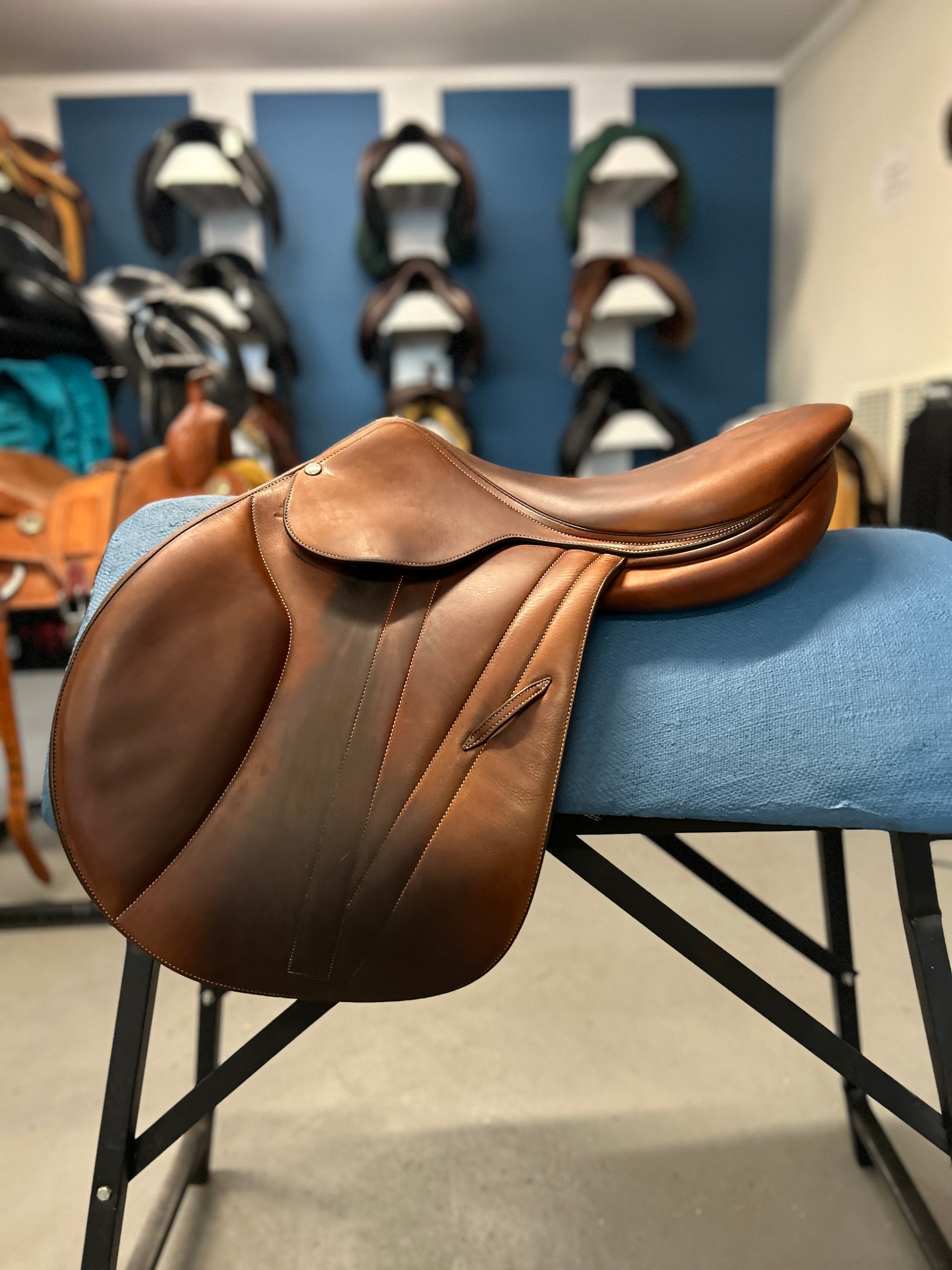
Butets are known for their close contact feel and narrower twist, which is part of what makes them so popular with riders who want to feel every conversation with their horse. That narrow twist does mean they tend to fit narrower - they're not the best match for horses with large shoulders or a convex area behind the shoulder, but they work beautifully on thoroughbreds, French-breds, and horses with normal to narrower shoulders.
One thing that catches people off guard: Butets come in whole sizes only in North America. Half sizes exist but you'll mostly find them in Europe. More importantly, Butet seat sizes can run 1/2 to 3/4 of an inch off from the stamp - more consistently than most other brands. Always measure the actual seat, both the one you want and the one you're considering buying.
Tree width options: E - Narrow N / S - Standard W - Wide XL - Extra Wide (No letter in the serial number means standard tree)
Seat depth: P - Flat L - Half Deep C - Deep
Flap lengths: 1 - Standard 2 - Long 3 - Extra Long 1/4 - Slightly Forward 1/2 - Forward
Year of manufacture is the number above MIF on the stamp.
Devoucoux
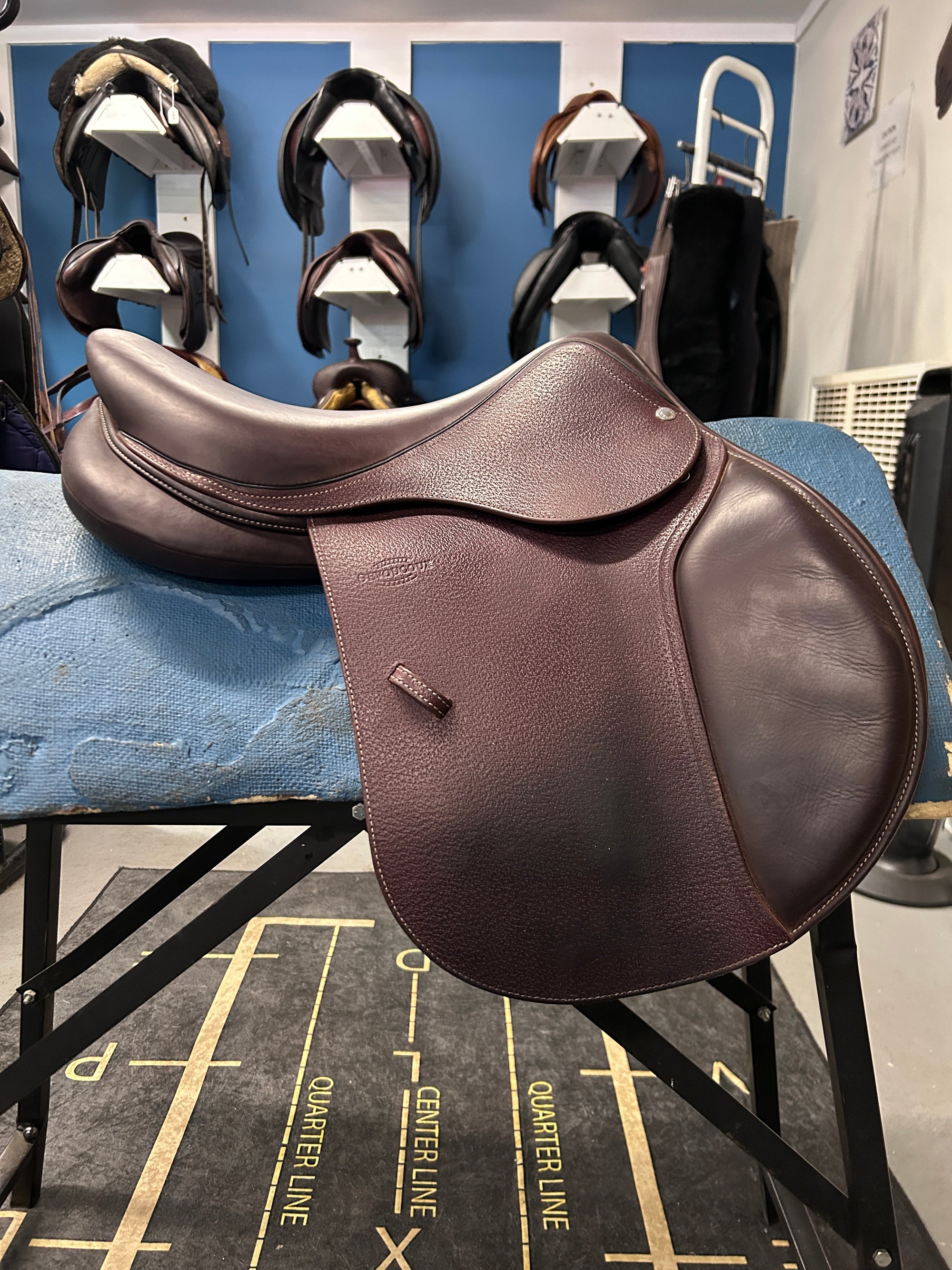
Devoucoux saddles come in whole and half seat sizes with flap lengths running 0 through 5. Leather options include grain/calf, full calf, and buffalo. One thing that sets Devoucoux apart is their four levels of flap forwardness - D being the straightest, standard having no letter, A being forward, and AA being very forward. That granularity is genuinely useful when you're trying to match a saddle to a specific riding position.
The stamp runs like this:
Example: 18S42019888 002 2A D3D 4.0 3-5
18 - year of manufacture (2018) S42019888 - saddle reference number 002 - seat size 2A - flap configuration D3D 4.0 3-5 - panel configuration
Seat sizes: 001 - 16" to 16.5" 002 - 17" to 17.5" 003 - 18" to 18.5"
Flap lengths: 0 through 5
Flap shape: D - Straight A - Forward AA - Very Forward B - Lower Curve
Panel note: D3D panels have a wider weight-bearing surface area - about 30% more contact than the previous generation. Worth looking for if your horse needs better pressure distribution.
Voltaire
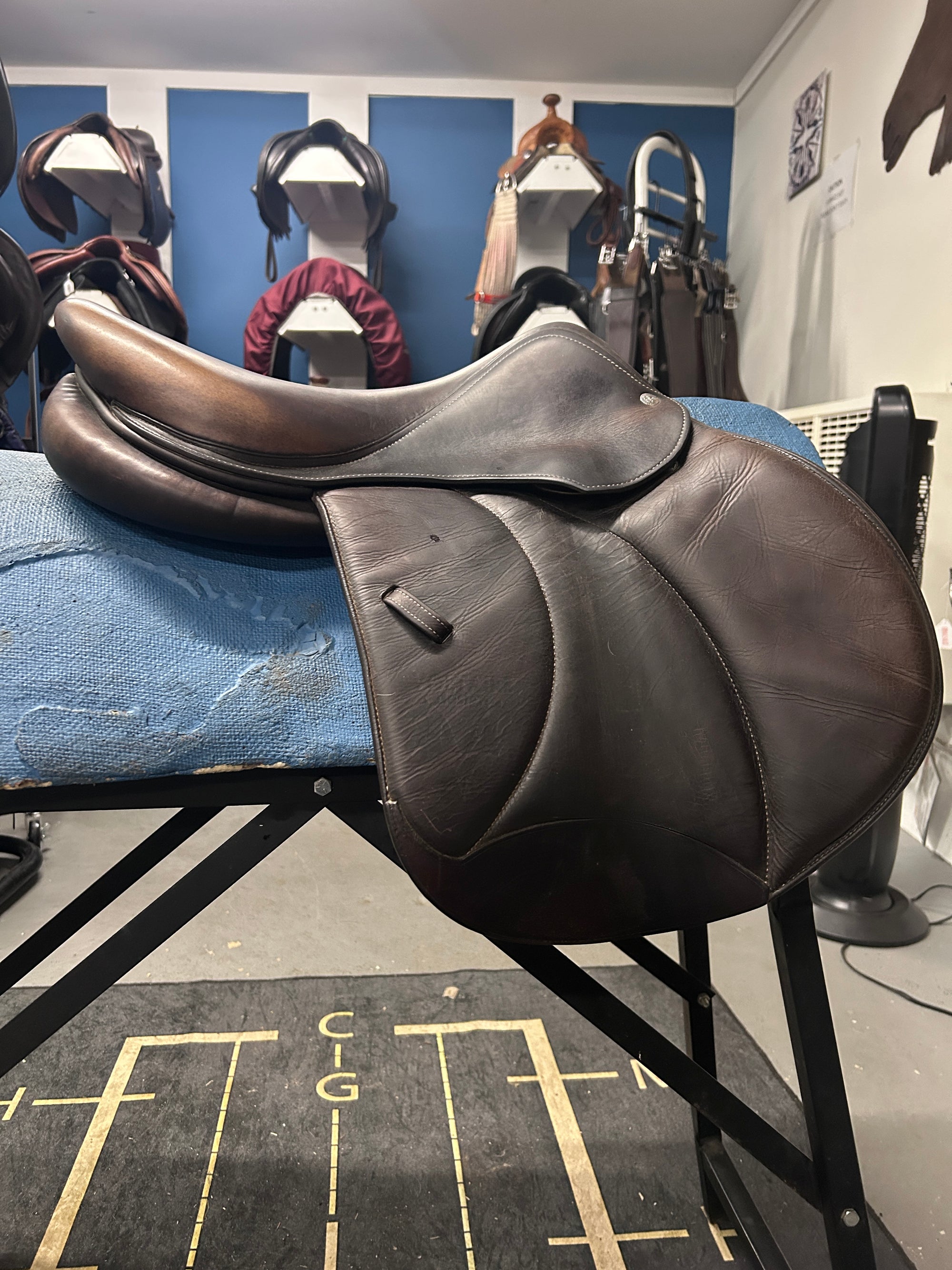
Voltaire's an interesting one, because it didn't come out of nowhere. It was started by former Devoucoux people, so if a Voltaire feels familiar in your hand, that's why. They went wider in the tree with a half-deep seat, and their "second skin" sweat flap is cut thin to get you close to the horse through your lower leg. They're also one of the lighter French saddles, usually in a dark chocolate leather, and you can often spot the signature blue stripe on the gullet or billet guards.
The billet setup is worth knowing before you shop. Instead of three fixed billets, Voltaire runs two billets on three rings that loop on and off. In practice that means a worn billet is something you can order and swap yourself instead of shipping the saddle to a saddler, and you can shift where the billets sit to fine-tune your girthing.
The stamp is under the sweat flap, like most French saddles.
Example stamp: 462 15 17 3AA M/M B15
- 462 = saddle maker's reference number
- 15 = year of manufacture (2015)
- 17 = seat size
- 3AA = flap (length 3, AA forwardness)
- M/M = Front and Back Blocks (Medium/Large)
- B15 = panel configuration
Flap forwardness runs standard, A, AA, AAA, with a B added when there's extra forwardness in the bottom third of the flap. Flap lengths run 0 through 5.
Models you'll come across: Palm Beach (half-deep seat), Stuttgart (deeper jump seat), and Calgary (flatter seat), along with a few others. Like all the French brands, the panels are foam rather than flocking, and a "Pro" marking on the stamp means the pro panels.
Voltaire
Pro panels are the flexible ones Voltaire's best known for, and they fit a fair range of horses, which is why most people go looking for them. The other one you'll see marked is FIN, which has more cutout around the wither - that's the panel to look at if your horse needs extra clearance back there.
The stamp also tells you where the padding sits. Voltaire splits the panel into four zones, A through D, running front to back. A is right under the pommel, then B, C and D follow back toward the cantle. A code like B10 or D10 means 10mm of extra foam was added in that zone, and B and D are the spots you'll see built up most often. So a panel reading Pro B10 D10 is the flexible panel with a little extra support behind the pommel and at the cantle.
A quick note on tree width, since it trips people up. On a lot of Voltaires you'll see AN or AO. AN is Arcade Normale, the normal tree, and it often doesn't get stamped at all - so a blank where you'd expect a width usually means standard. AO is Arcade Ouverte, the wider tree, and that one does show up. Either way, with a foam-paneled saddle the panels do as much for the fit as the tree does, so don't shop on the tree code alone.
Stamp Examples

Antares
This stamp reads 07 1816 SC 3 D 16.5 L, which translate to a 2007 Semi-Deep 3D Flap, 16.5" Seat

Childeric - Dressage
French Dressage Saddles also have stamps. This is a Childeric Dressage, has a 0 for a short flap, the DAC which is the model, 17 for the seat, serial number and then a year, 2011 for this one.

Voltaire Blue Infinity
This Voltaire Saddle has the model stamped on the top, followed by the serial number, 2305 and the year 2020. Under is the seat and flap size and then information about the tree and then the panels.

Devoucoux Biarritzo
Devoucoux saddles have a longer serial at the top, this number does include the year the saddle was made. Then below it will have the seat, flap and the panels information.


